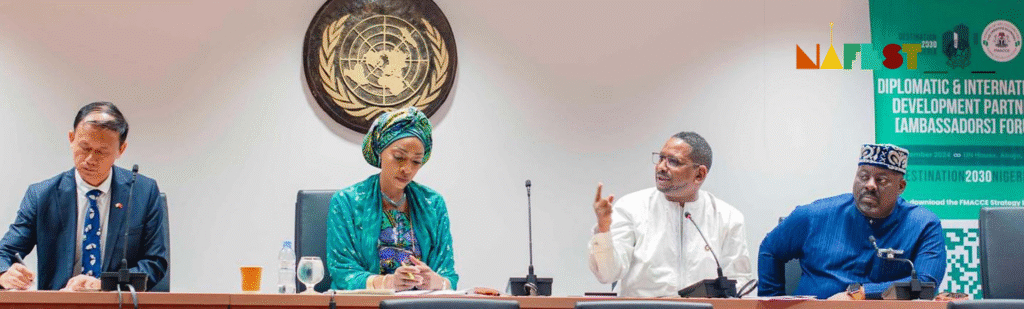
The National Festival of Arts and Culture (NAFEST), our cultural Olympics, has been a vital part of Nigeria’s rich heritage since 1970. With all 36 states and the FCT competing across various segments, this year’s edition, running from November 22 to November 30 in Abuja, promises to deliver a world-class festival reimagined for modern times. The theme for this year, “Connected Culture,” embodies our shared values as we come together to celebrate, connect, and engage in friendly competition.
This year, NAFEST will present a powerful theater performance titled “Ibe Ji Mma: The Healing.” This play aims to evoke a sense of national healing and unity, underscoring the festival’s spirit of togetherness. Nigeria’s incredible cultural diversity will be on full display, offering a transformative experience that highlights the importance of healing and unity in our nation.

“Ibe Ji Nma: The Healing!”
“Ibeji” means “twin” in Yoruba, while “Ejima” means “twin” in Igbo.
Two similar people, like twins, connected in languages and cultures.
Ibe Ji Mma is an epic play that declares, “Colonialism did not bring
us together; we have been in these lands for thousands of years!”
In a time when the Eastern and Western kingdoms were looking for
heirs, the stars led them to the North. There, they meet a desperate
mother of twins who pleads for each king to save her sons from
starvation. One thousand years later, Ebunoluwa and Ifesinachi were
born. Their story is the tale of this play… Ibe Ji Mma shows that we
have connected origins. It is time to understand our deep
connections and embrace our identity as brothers.
The play revolves around Ibeji-Ejima, Twins and what happens
when things fall apart.
Ibe Ji Mma is an epic story of twins, Princess EbunOluwa and Prince
IFESINACHI, born in the Eastern Kingdom where twins were prohibited.
Separated at birth, Ebun grew up as a Princess of the Western Kingdom and
Ifesinachi as a Prince of the East. Arriving at the age of adulthood, they both
decide to leave their lands and tour the world as commoners. They visit many lands
including the kingdoms of the North and South. Their journeys proceed until
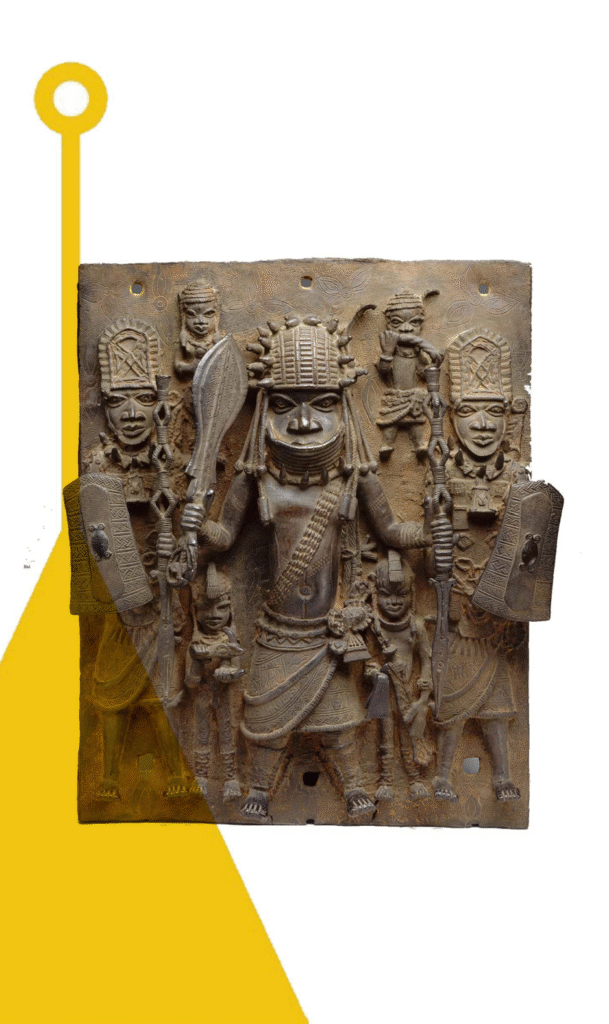
through a pure twist of fate, they meet in the Middle Kingdom, during the glorious
period of the bronze casters.
Ebun and Ifesinachi fall irredeemably in love, but it is a union that must not hold,
because “blood cannot have blood,” as we will find out. Ifesinachi follows her and
discovers to his surprise that she is no other than a Princess of the West, the East’s
sworn enemy. Against the wise counsel of his elder guard and sage, Ifesinachi is
made to prostrate full body before the Western king as a precondition to grant him
audience. It is well-known that the Eastern Sun prostrates before none. When the
Eastern king discovers the humiliation, He swears to revenge the disgrace and
prepares for war against the West.
Meanwhile, both lovers, consumed by passion run off to meet each other, but get
lost in the forest of the Middle Kingdom. News arrives in the West that the East
has kidnapped Princess Ebun. The Western monarch prepares for war to liberate the
Princess and revenge the disgrace of her abduction. Armed to the teeth, The East
and West meet in the forest of the Middle kingdom and await orders from their
respective monarchs to unleash mayhem and annihilate each other.
But Uka, sage and resident of the forest of the Middle kingdom “friend to beasts
and humans” intervenes and reveals that Ebun and Ifesinachi are twins, so “blood
must not have blood”. On discovering that they are related by blood, the two
kingdoms drop their weapons, embrace each other and peace finally reigns in the
land that is later to be known as Nigeria.